
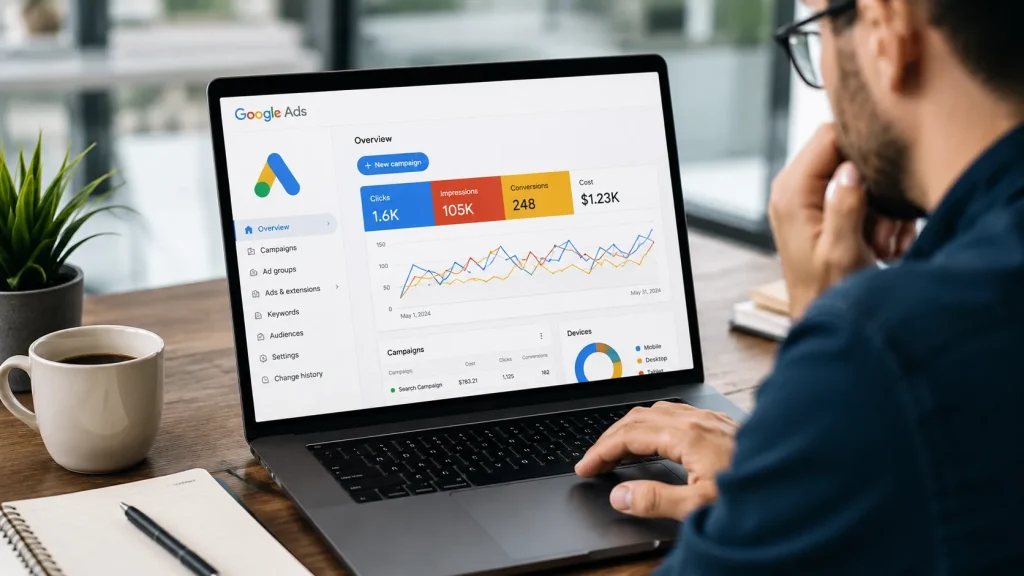
Google Ads remains one of the largest digital advertising platforms in the world. The platform served millions of advertisers across more than 200 countries in 2026. Businesses use Google Ads to reach customers through Search, YouTube, Gmail, Maps, and partner websites.
Understanding how Google Ads works helps beginners create campaigns that generate traffic and sales. Google processed more than 8.5 billion searches daily in 2026, creating massive opportunities for advertisers. Google Ads operates on an auction system that determines which ads appear and in what order. Advertisers control budgets, keywords, locations, and targeting options.
This flexibility makes the platform suitable for both small businesses and large brands. We can start with modest budgets and scale campaigns based on results. Learning the basics helps avoid costly mistakes and improves return on ad spend.
What Is Google Ads and Why Does It Matter?
Google Ads is Google’s online advertising platform. It allows businesses to display ads when users search for products or services. The platform launched in October 2000 and has evolved significantly. In 2026, Google advertising generated more than 75% of Alphabet’s total revenue.
Types of Google Ads Campaigns
Google Ads offers several campaign formats for different goals. Search campaigns show text ads on search results pages. Display campaigns place visual ads across millions of websites. Video campaigns appear on YouTube. Shopping campaigns promote products with prices and images. Performance Max campaigns use automation across all Google channels.
Businesses choose campaign types based on objectives. Search campaigns often deliver strong intent because users actively seek information. Video campaigns help increase brand awareness. Shopping campaigns support e-commerce businesses with product-focused advertising.
Google Ads Campaign Types
| Campaign Type | Main Purpose | Ad Format |
|---|---|---|
| Search | Lead generation | Text ads |
| Display | Brand awareness | Image ads |
| Video | Engagement | Video ads |
| Shopping | Product sales | Product listings |
| Performance Max | Multi-channel growth | Automated ads |
How Google Ads Auction Works
Google Ads uses a real-time auction process. Every search triggers an auction among advertisers targeting relevant keywords. Winning positions depend on more than bid amounts. Google evaluates Ad Rank, which combines bids, quality scores, and expected impact.
Understanding Quality Score
Quality Score ranges from 1 to 10. It measures ad relevance, landing page quality, and expected click-through rates. A higher score often lowers costs. Google rewards advertisers who provide useful experiences.
Average search click-through rates reached 6.42% across industries in 2026. Quality Score improvements can reduce cost per click by up to 50%. Businesses that optimize landing pages often gain better ad positions without increasing budgets.
For example, an advertiser bidding $2.50 with a Quality Score of 9 may outrank a competitor bidding $4.00 with a score of 4. Relevance matters more than simply spending more money.
Keyword Targeting and Audience Selection
Keywords are the foundation of Google Ads campaigns. Advertisers select words users may search for. Google then matches ads with relevant searches. Keyword match types influence how broad or specific targeting becomes.
Match Types Explained
Broad Match reaches the widest audience. Phrase Match focuses on searches containing specific phrases. Exact Match targets highly relevant queries. Negative keywords prevent ads from showing for unwanted searches.
Experienced advertisers often combine match types for better control. According to digital marketing consultant Brad Geddes, keyword strategy determines campaign efficiency. He recommends continuous search term analysis to remove wasteful traffic.
Audience targeting also strengthens campaigns. Advertisers can target age groups, locations, devices, and interests. Google Ads supports remarketing, which reconnects with previous website visitors. Remarketing campaigns commonly increase conversion rates by 43%.
Important Targeting Features
- Geographic targeting.
- Device targeting.
- Demographic filters.
- Remarketing audiences.
- Interest-based segments.
- Negative keyword exclusions.
Budgeting and Measuring Results
Google Ads gives advertisers full control over spending. Businesses can set daily budgets and maximum bids. Campaigns may start with as little as $5 per day. Costs vary by industry and keyword competition.
Key Metrics to Track
Several metrics indicate campaign performance. Click-through rate measures engagement. Cost per click reflects advertising expenses. Conversion rate tracks completed actions. Return on ad spend evaluates profitability.
The average Google Search conversion rate across industries reached 7.52% in 2026. Businesses that track data regularly improve efficiency faster. Marketing analyst Frederick Vallaeys emphasizes weekly optimization. He advises advertisers to review reports and adjust campaigns based on real performance.
Successful campaigns require continuous monitoring. Automated bidding strategies help optimize results. Smart Bidding uses machine learning to maximize conversions. These tools simplify campaign management for beginners.
Essential Metrics Table
| Metric | Industry Average 2026 |
|---|---|
| Click-Through Rate | 6.42% |
| Conversion Rate | 7.52% |
| Mobile Search Share | 63% |
| Average Quality Score Goal | 7/10 |
| Recommended Daily Budget | $5-$50 |
Common Mistakes Beginners Should Avoid
Many beginners spend money without proper planning. Broad targeting often wastes budgets. Ignoring negative keywords leads to irrelevant traffic. Weak landing pages reduce conversions.
Professional advertisers recommend starting with smaller campaigns. Testing ad copy improves performance. Data-driven decisions produce stronger outcomes. Reviewing campaigns weekly prevents unnecessary spending.
Common errors include:
- Using too many keywords.
- Ignoring Quality Score.
- Sending traffic to poor landing pages.
- Failing to track conversions.
- Avoiding regular optimization.
Real campaign experience shows that simple structures perform better. Small businesses often achieve stronger returns with focused campaigns rather than large, complex accounts. Get started with our in-depth resource on The Importance of Local SEO for Small Businesses.
Conclusion
Google Ads provides businesses with powerful tools to reach customers across Google’s ecosystem. The platform combines keyword targeting, auctions, audience segmentation, and performance tracking. Understanding these fundamentals helps beginners create efficient campaigns.
Strong Quality Scores, smart keyword choices, and regular optimization improve results over time. Businesses can start with small budgets and expand based on performance data. Google Ads rewards relevance and user experience more than high spending. With proper strategy and consistent monitoring, advertisers can turn clicks into measurable business growth.